FeaturesAt-risk and baselines
You see them slipping while there is still time.
Fourteen days is the floor, because a quiet week is normal attendance. Under that, each person is measured against their own rhythm rather than one blanket rule.
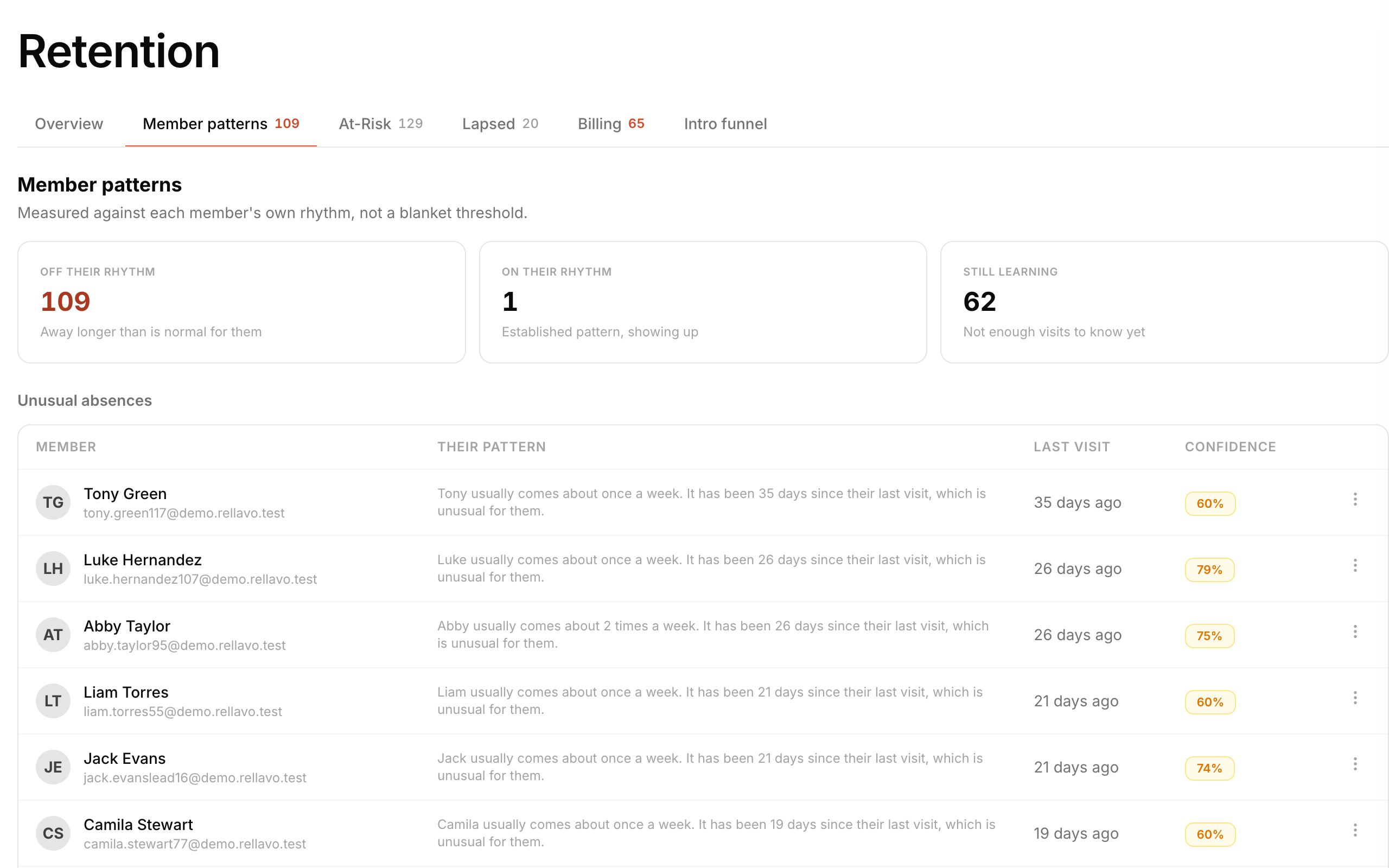
Measured against themselves
- Personal baselines
A four-times-a-week regular gets noticed at nine days, not thirty.
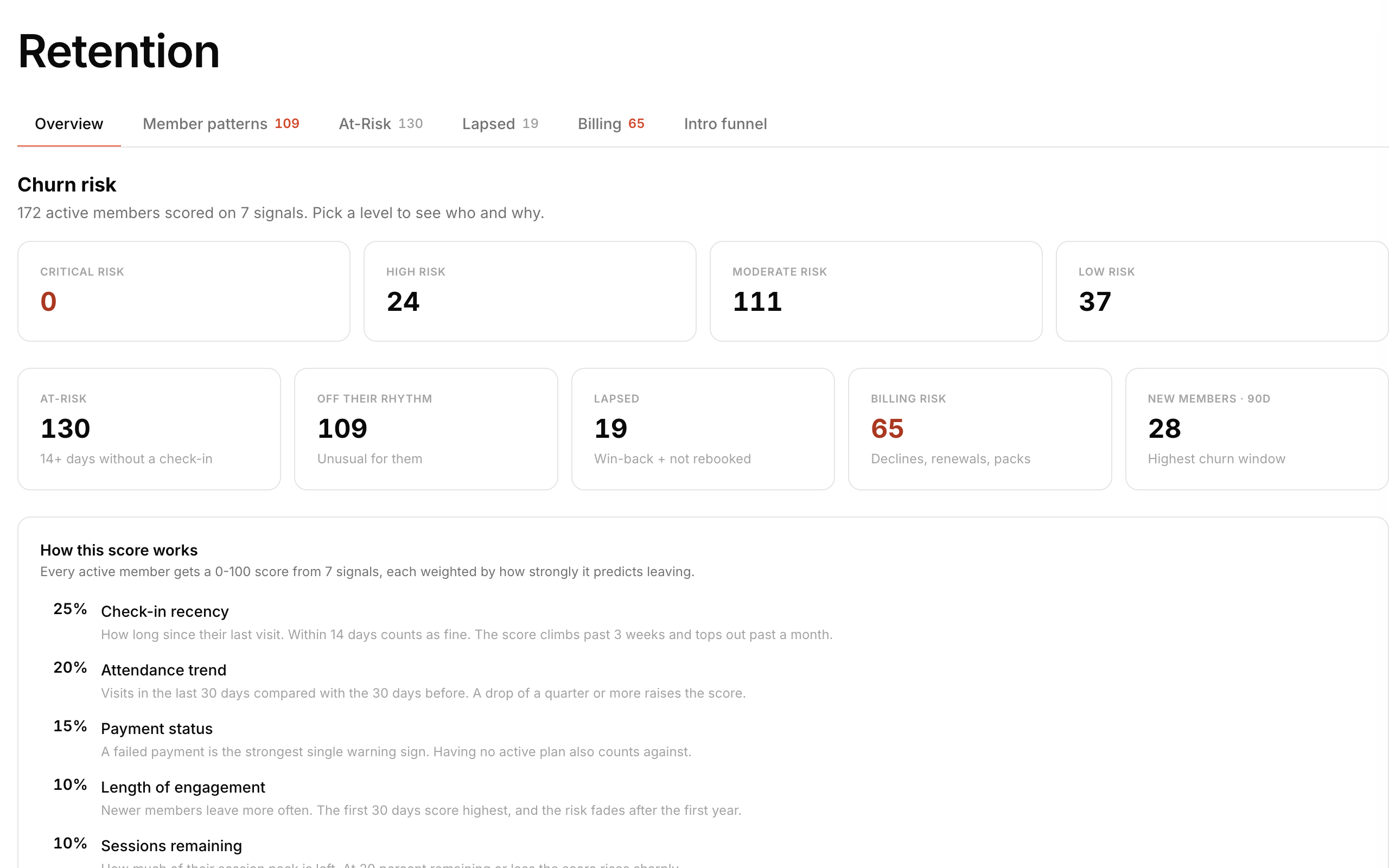
- Seven factors, printed
Every input to the score is written on the page in plain language.
- Confidence shown
Thin history falls back to the platform rule instead of guessing.
- Rebuilt nightly
Baselines recompute from the trailing eight weeks.
You decide what happens
- A ladder you set
Fourteen, twenty-one, thirty days, moved when your season changes.
- Cause-aware
A failed card and a quiet month get different messages.
- Reset on return
A check-in clears the ladder so nobody gets chased after coming back.
- Visible sends
Every message that went out is on the member’s record.


See it on your own numbers.
Tell us what you run and we will show you this working against your data.